Free MCAT flashcard deckAmino acid charge at physiological pH
One of the 18 decks in io-med, free here without an account. Fill in each blank from memory, then flip to check it, with the ionized form and the reason.
Card 1 of 27
Question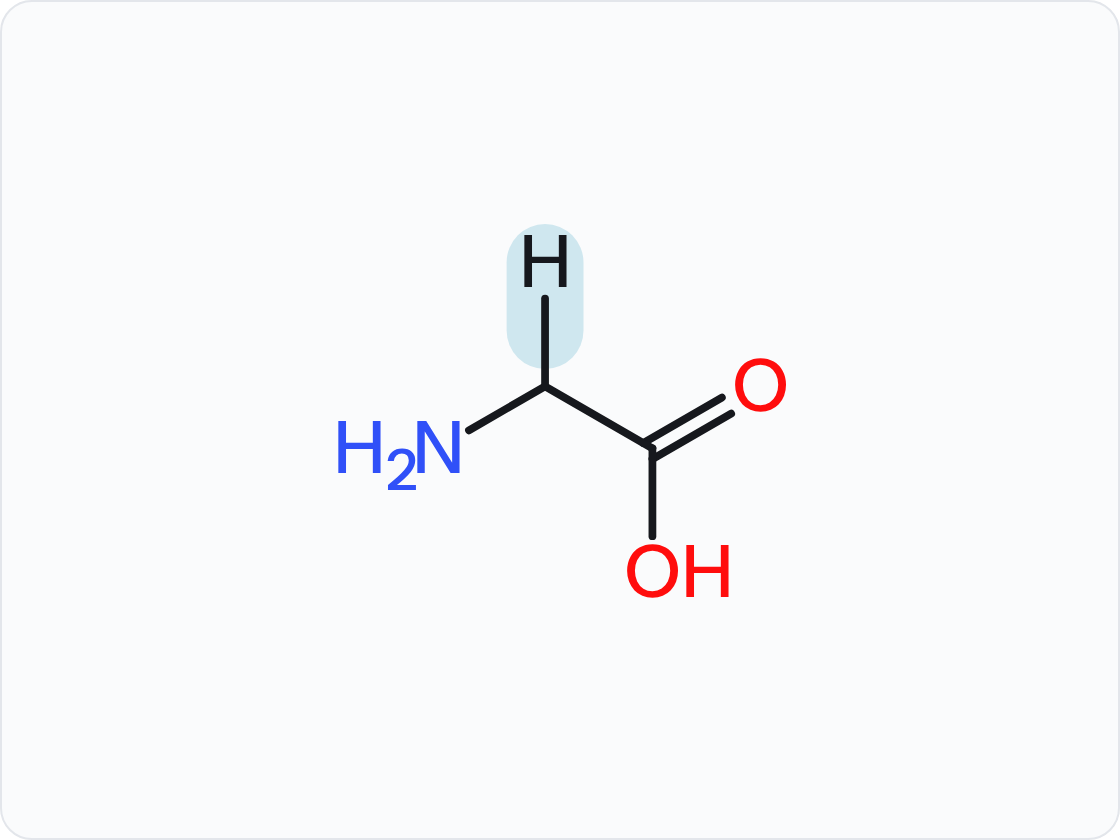 Tap the card or press Space to flip it
In the four-group scheme, glycine's side chain at pH 7.4 is [class].
Answer
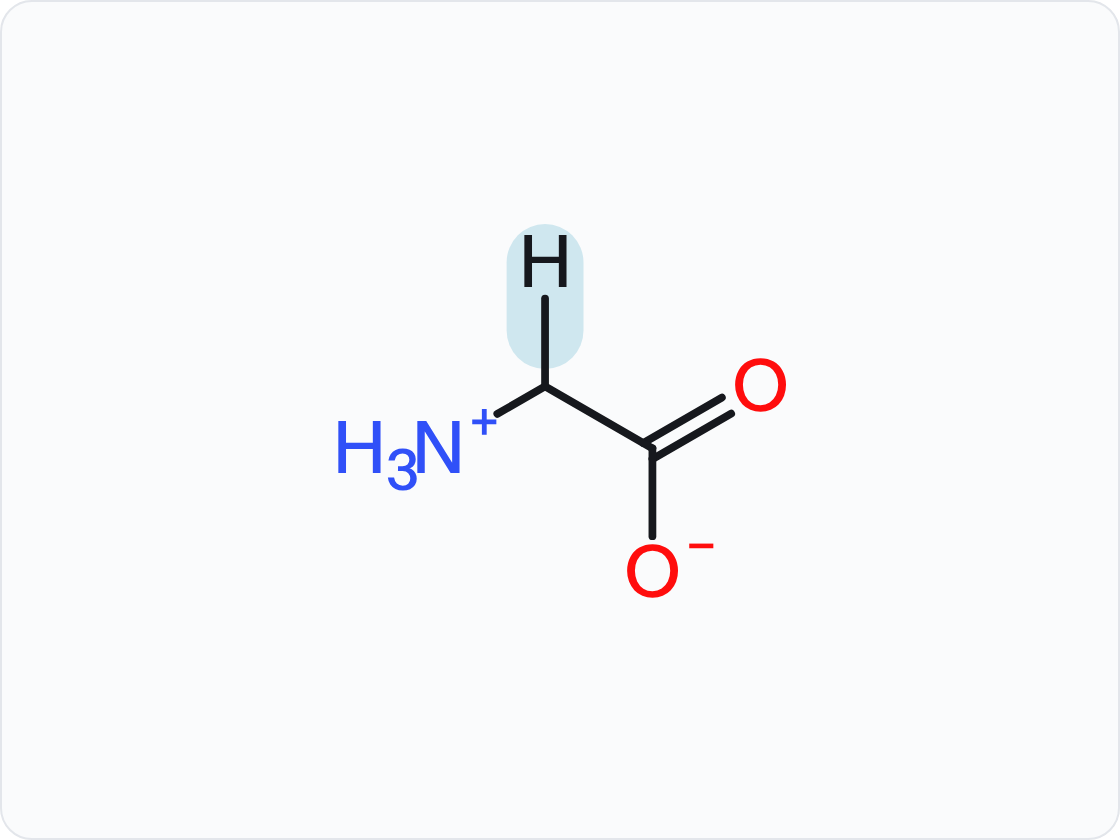
In the four-group scheme, glycine's side chain at pH 7.4 is nonpolar.
Its –H side chain has no polar or ionizable group, so it is grouped as nonpolar (some texts set glycine apart because the side chain is so small).
Space to flip, ← → to move between cards
All 27 cards
- 1In the four-group scheme, glycine's side chain at pH 7.4 is [class].In the four-group scheme, glycine's side chain at pH 7.4 is nonpolar.Its –H side chain has no polar or ionizable group, so it is grouped as nonpolar (some texts set glycine apart because the side chain is so small).
- 2
 In the four-group scheme, alanine's side chain at pH 7.4 is [class].In the four-group scheme, alanine's side chain at pH 7.4 is nonpolar.
 Its methyl side chain is pure hydrocarbon, with nothing that ionizes.
 - 3
 In the four-group scheme, serine's side chain at pH 7.4 is [class].In the four-group scheme, serine's side chain at pH 7.4 is polar.
 Its –OH makes it more polar than a hydrocarbon, but it carries no charge at pH 7.4.
 - 4
 In the four-group scheme, proline's side chain at pH 7.4 is [class].In the four-group scheme, proline's side chain at pH 7.4 is nonpolar.
 Its side chain is a hydrocarbon ring looping back to the backbone nitrogen, with no polar group.
 - 5
 In the four-group scheme, valine's side chain at pH 7.4 is [class].In the four-group scheme, valine's side chain at pH 7.4 is nonpolar.
 Its isopropyl side chain is pure hydrocarbon, the kind that buries in the protein core.
 - 6
 In the four-group scheme, threonine's side chain at pH 7.4 is [class].In the four-group scheme, threonine's side chain at pH 7.4 is polar.
 Its –OH makes it more polar than a hydrocarbon, but it carries no charge at pH 7.4.
 - 7
 In the four-group scheme, cysteine's side chain at pH 7.4 is [class].In the four-group scheme, cysteine's side chain at pH 7.4 is polar.
 Its –SH (pKa ≈ 8.3, free amino acid) is mostly protonated, and hydrophobicity scales rank it with the nonpolar residues.
 - 8
 In the four-group scheme, leucine's side chain at pH 7.4 is [class].In the four-group scheme, leucine's side chain at pH 7.4 is nonpolar.
 Its isobutyl side chain is pure hydrocarbon, the kind that buries in the protein core.
 - 9
 In the four-group scheme, isoleucine's side chain at pH 7.4 is [class].In the four-group scheme, isoleucine's side chain at pH 7.4 is nonpolar.
 Its sec-butyl side chain is pure hydrocarbon, the kind that buries in the protein core.
 - 10
 In the four-group scheme, asparagine's side chain at pH 7.4 is [class].In the four-group scheme, asparagine's side chain at pH 7.4 is polar.
 Its amide makes it more polar than a hydrocarbon, but it carries no charge at pH 7.4.
 - 11
 In the four-group scheme, aspartate's side chain at pH 7.4 is [class].In the four-group scheme, aspartate's side chain at pH 7.4 is acidic.
 Its carboxyl (pKa ≈ 3.9, free amino acid) is mostly deprotonated at pH 7.4, so it is negative.
 - 12
 In the four-group scheme, glutamine's side chain at pH 7.4 is [class].In the four-group scheme, glutamine's side chain at pH 7.4 is polar.
 Its amide makes it more polar than a hydrocarbon, but it carries no charge at pH 7.4.
 - 13
 In the four-group scheme, lysine's side chain at pH 7.4 is [class].In the four-group scheme, lysine's side chain at pH 7.4 is basic.
 Its amino group (pKa ≈ 10.5, free amino acid) is mostly protonated at pH 7.4, so it is positive.
 - 14
 In the four-group scheme, glutamate's side chain at pH 7.4 is [class].In the four-group scheme, glutamate's side chain at pH 7.4 is acidic.
 Its carboxyl (pKa ≈ 4.3, free amino acid) is mostly deprotonated at pH 7.4, so it is negative.
 - 15
 In the four-group scheme, methionine's side chain at pH 7.4 is [class].In the four-group scheme, methionine's side chain at pH 7.4 is nonpolar.
 Its thioether sulfur carries no group that ionizes, so it sorts with the hydrocarbons.
 - 16
 In the four-group scheme, histidine's side chain at pH 7.4 is [class].In the four-group scheme, histidine's side chain at pH 7.4 is basic.
 Classed basic, yet with pKa ≈ 6 (free amino acid) it is mostly deprotonated and neutral at pH 7.4.
 - 17
 In the four-group scheme, phenylalanine's side chain at pH 7.4 is [class].In the four-group scheme, phenylalanine's side chain at pH 7.4 is nonpolar.
 Its ring has no heteroatoms, though five-group schemes such as Lehninger's give aromatics their own group.
 - 18
 In the four-group scheme, arginine's side chain at pH 7.4 is [class].In the four-group scheme, arginine's side chain at pH 7.4 is basic.
 Its guanidinium (pKa ≈ 12.5, free amino acid) stays protonated, positive across the physiological range.
 - 19
 In the four-group scheme, tyrosine's side chain at pH 7.4 is [class].In the four-group scheme, tyrosine's side chain at pH 7.4 is polar.
 Its –OH (pKa ≈ 10.1, free amino acid) stays protonated, and Lehninger's five groups list it as aromatic.
 - 20
 In the four-group scheme, tryptophan's side chain at pH 7.4 is [class].In the four-group scheme, tryptophan's side chain at pH 7.4 is nonpolar.
 Its indole is mostly hydrocarbon, though five-group schemes such as Lehninger's give aromatics their own group.
 - 21In free cysteine, the side-chain pKa is about [number].In free cysteine, the side-chain pKa is about 8.3.Above 7.4, so at physiological pH the side chain is mostly protonated and neutral.
- 22In free aspartate, the side-chain pKa is about [number].In free aspartate, the side-chain pKa is about 3.9.Below 7.4, so at physiological pH the side chain is mostly deprotonated and negative.
- 23In free lysine, the side-chain pKa is about [number].In free lysine, the side-chain pKa is about 10.5.Above 7.4, so at physiological pH the side chain is mostly protonated and positive.
- 24In free glutamate, the side-chain pKa is about [number].In free glutamate, the side-chain pKa is about 4.3.Below 7.4, so at physiological pH the side chain is mostly deprotonated and negative.
- 25In free histidine, the side-chain pKa is about [number].In free histidine, the side-chain pKa is about 6.The side-chain pKa closest to neutral, so histidine is the side chain proteins buffer with.
- 26In free arginine, the side-chain pKa is about [number].In free arginine, the side-chain pKa is about 12.5.The most basic side chain, so it stays positive across the entire physiological range.
- 27In free tyrosine, the side-chain pKa is about [number].In free tyrosine, the side-chain pKa is about 10.1.Above 7.4, so at physiological pH the side chain is mostly protonated and neutral.
The other 17 decks cover amino acid structures and codes, each step of the core metabolic pathways, their regulation, yields and clinical links. In io-med, spaced review brings each card back right before you would forget it.
Card required, nothing charged today. Then from $33/mo, auto-renews unless you cancel. Cancel in one click from Settings.